

How VoWLAN changed my view on designing AP's in hallways

Editorial: I started with a little background but it seems it became "my life in WiFi so far"
Well i’ve been doing Wireless since 2012 and just like our technology evolves, our approach for designing for wireless networks evolves. Sometimes it’s a revolution other times it’s an easy and gradual change.
Back when i started, we used to do AP on a stick and nothing but AP on a stick. And I remember how convinced we were that it was they only way to do it right. You have to be onsite, and measure each access point! Oh, when I say we, I mean @joeri_Skyline & @JustinSkyline & myself. You might have met us -probably in the bar- of a #WLPC either US or Europe.
At that first WLPC in Austin, when we felt like the whole community was moving to predictive modelling, we were still convinced our way was the right way.
And when we talked to the people there, they would ask: If you only do APoS, then how do you measure CCI? And we would answer that we have a clever way to use a 4-colored pen to draw circles on the ground plans with a color for the target RSSI -67dBm and the CCI limit -85dBm. And that we did this per channel in 2.4GHz band. Yeah, you probably have the same look on your face as the people we talked to 😃 back then.


It worked, kinda…We made it work, although we know now it was far from bulletproof. But we were so focused on the fact that in this predictive model you did not go onsite & thus get no live measurements, don’t see the actual walls and buildings… we could not see passed the flaws of our own model.
Luckily we also got a years licence for Ekahau that year, Thanks Jussi!
So it started to dawn on us, how we could get best out of both worlds. Our onsite measurements + all the extra data we could display and design around by using planning methods. Co-Channel Contention was now something that we could really visualise. Well i should say better visualise because in the modelling part it still doesn’t take into account reflections, but we we’re definitely in the ball-park now. We could turn of 2.4GHz radios, well we can now ,right? Raise your hand if you remember the days before the right-click disable radio function? It was a pain in the ass, but we could do it & therefore deliver a better design to our customers.
Anyway we’ve come a long way since then: Now our preferred model is a Hybrid and I believe the consensus in the community is, this is the way to go. We still go onsite. We collect data about attenuation of wall-types, floors and god knows what else is in a building/warehouse/production site/healthcare environment… the list is long. We still use spectrum analysers for non-WiFi interference and checking the noise floor.
The biggest difference is, I’d like to believe, I now know how to use all that Data to design better WiFi. Through the years I tried educating myself as much as possible in between, building our Home, starting as an independent consultant-when time really became money- and having two lovely kids along the way. The CWNP program has been my ally in this as well as some much enjoyed trainings and bootcamps. Props to Keith Parsons & Ron Van Kleunen who were instructors of the classes i took. CWTS, CWNA, CWAP, CWDP, CWSP, ECSE certifications are all crossed of my to-do list. Who knows, maybe CWNE one day.
OK, back to the original point!
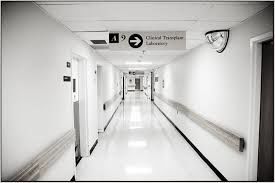
When I started out, for VoWLAN deployments I would always put some AP’s in the hallways and in case of intersecting hallways I would always make sure that AP’s had line of sight to one another, so the phones would always see 2 really strong signals when roaming through hallways.
Then a few years ago I hopped on the bandwagon of avoiding AP’s in hallways at all costs! You just can’t! It is bad design, period!
Well, that didn’t backfire entirely, but we did see more and more issues with VoWLAN phones that had a hard time roaming.
So gradually I started going back to some AP’s in the hallways, just to get the client that nice fuzzy feeling of having an AP close by it with a high RSSI, it would immediately fall in love with and try to join.
And now i’m actually leaning more to the old way of doing it. Instead of the double blanket of -67dBm everywhere, I like to focus on potential roaming areas and make sure that the really high RSSI is there where roaming may occur. Although i understand the concept and see why it can work, I have a different opinion. I think it causes unnecessary confusion on the client side.
When someone is walking through a hallway while on a call, i like to keep the confusion for the client to a minimum. I do not want it to "pong" from a room on the left of the hallway to a room on the right and vice versa.
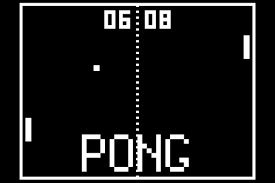
My personal experience tells me, these VoWLAN phones get confused easily. And in these "stay out of the hallway" deployments we see it occur. The client sees 3 AP’s around -67, chooses one, one you’re actually walking away from, hops to another one and another, eventually just sticking on an AP and you get bad userX. I like to remove this confusion and have the client see just 2 really strong AP’s. So it can say: Ok i’m leaving you, you look hot i’m joining you & i’m not leaving you until i’m looking for a better one! Because that’s the trick isn’t it? You only want to better yourself when you’ve already decided to leave the old partner, AP i mean 😉. There’s no use in constantly looking at other partners once you’re settled, it i’ll only confuse you, Right? Or wrong?
Please feel free to leave you’re comments below.
Thanks for reading.
Hope to see you soon.
Yannick
yannick.heymans@layerone.be
